
Kitchen Trends for 2026: Your Questions Answered
If you’ve been thinking about a new kitchen this year, you’re probably asking the same questions we hear in our Newcastle showroom every week. What colours are people choosing? Are islands still worth it? What materials are holding up over time? And will any of it look dated in five years?
We’ve pulled together the questions homeowners are asking most right now, and answered them honestly, based on what we’re actually seeing in bespoke kitchens across the North East.
What Colours Are Trending in Kitchens for 2026?
The shift is toward depth and warmth. Flat, cool greys have largely given way to richer, more considered tones. Right now, the colours generating the most interest are:
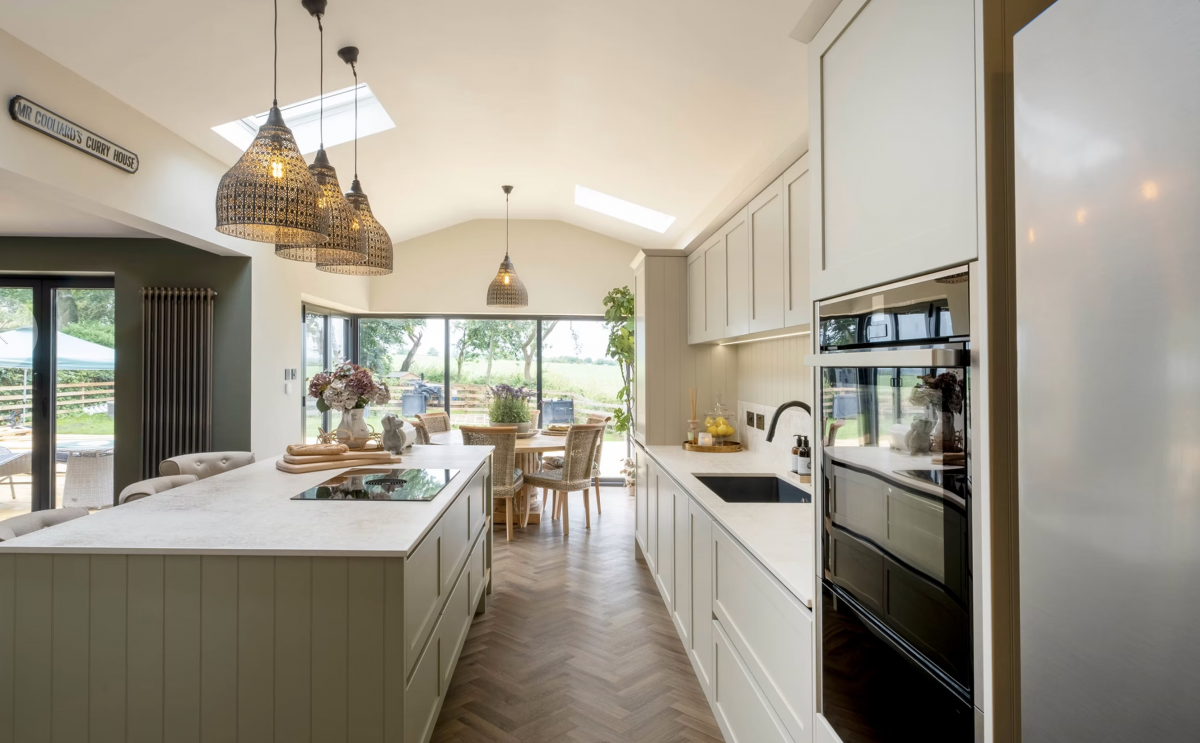
Warm neutrals with character. Putty, stone, parchment, and greige are replacing the stark whites of the last decade. These shades feel calm without feeling cold, and they photograph beautifully. They also have the commercial advantage of working with almost any worktop or flooring.
Deep, moody cabinetry. Rich tones are here to stay – deep greens and dark wood stains continue to hold their ground, bringing warmth, character, and a sense of permanence that lighter palettes simply cannot replicate. If you’ve been tempted by this direction, 2026 is a confident time to commit to it.
Earthy terracottas and clay tones. These are newer to the mainstream, influenced by the wider interiors trend toward natural, organic references. Used carefully in a bespoke kitchen design, they can feel genuinely distinctive rather than trend-led.
What all these choices have in common is considered restraint. Homeowners are moving away from safe and generic toward something that feels personal. That is exactly the kind of decision we enjoy helping people make. Take a look at our most recent projects for a sense of what’s possible.
Are Kitchen Islands Still in Demand?
Yes, consistently, and the brief has evolved. The island is no longer just a prep surface. In 2026, the most requested island designs serve four or five functions at once: preparation, cooking, storage, seating, and socialising.
Specific changes we’re seeing include:
Integrated appliances within the island itself. Induction hobs, pop-up extractor systems, and wine fridges built into the island structure are all increasingly common, particularly in open-plan kitchen design in the North East.
Mixed materials. A stone or porcelain surface on the main island paired with a contrasting timber or aged brass detail elsewhere adds visual weight and a sense of craftsmanship that a single-material approach rarely achieves.
Breakfast bar integration. The waterfall edge with an extended overhang for seating remains extremely popular. It removes the need for a separate dining table in many homes and adds a natural gathering point.
The demand for islands has not slowed. What has changed is the level of thought going into how they’re designed and used.
What Materials Are Popular in Bespoke Kitchens in 2026?
Material choices in 2026 are being driven by two things: longevity and honesty. Homeowners want surfaces that look genuinely good, age well, and don’t require constant maintenance. Here is what is performing strongly:
Porcelain surfaces. Brands like Dekton and Laminam have moved from a niche specification to a mainstream preference for worktops and splashbacks. They’re extremely hard-wearing, heat and scratch resistant, and available in large-format slabs that allow for seamless installation. For luxury kitchens homeowners are commissioning, porcelain is now the leading worktop choice.
Honed or leathered granite. Natural stone with Matt surfaces are gaining ground over the polished version. They are much more forgiving, hiding everyday marks and adding a more considered feel.
Oaks and Walnut veneers. Timber remains a staple in bespoke kitchen design. Warm-toned hardwoods are being used for open shelving, island details, and flooring as much as for cabinetry, adding a natural contrast to stone and painted surfaces.
Aged and unlacquered brass. Brass hardware and tap fittings have been building momentum for several years. The unlacquered version, which develops a natural patina over time, is particularly sought after for its handmade, artisan feel.
Will the Trends of 2026 Date Quickly?
This is the most important question, and the honest answer is: it depends how you approach them.
Chasing a trend for its own sake will always date. A kitchen designed specifically around a momentary colour story or a material that is popular right now, but chosen for that reason alone, is likely to feel less fresh in five years. That is true of any year, not just 2026.
However, the trends we’re describing above are not fast fashion. Warm neutrals, natural stone, solid timber, and functional islands reflect a deeper, longer-running movement toward quality, durability, and authenticity in the home. These are not new ideas. They are the principles that have always defined genuinely good kitchen design.
The kitchens that age best, in our experience, are the ones designed with the homeowner’s lifestyle at the centre, not a trend board. Bespoke kitchens in Newcastle and across Northumberland that we designed five or ten years ago still look exceptional today, precisely because they were built around the people who use them.
Our advice: let the trends inform your thinking, but let your own home, habits, and tastes make the final call. That is exactly the conversation we have with every client before a single cabinet is specified.
Thinking About a New Kitchen This Year?
If the questions in this post have been on your mind, a design consultation is the best next step. We’ll talk through your space, your priorities, and the finishes that genuinely suit your home, with no pressure and no generic solutions.
Book a design consultation today and let’s start designing something you’ll love for years to come.